Stay calm — the first 10 minutes matter most
Water where it shouldn't be is alarming, but panic causes more damage than the leak itself. Whether it's a burst pipe, an overflowing tank or water seeping through a ceiling, follow these five steps in order.
1. Turn off the main water supply
Find your home's main valve — usually near the water meter, under the kitchen sink, or in the building's utility area — and turn it clockwise to close. This single action stops most leaks from getting worse.
2. Switch off electricity in the affected area
Water and electricity are a dangerous mix. If water is near sockets, switches or light fittings, turn off that circuit at your breaker panel before touching anything wet.
3. Contain the spread
Move furniture, rugs and electronics away. Lay down towels or buckets under active drips. If water is coming through a ceiling, place a wide container underneath and poke nothing — let it drain where it wants to.
4. Photograph everything
Take clear photos and a short video of the leak, the damage and where the water is coming from. This helps your plumber diagnose faster — and it's essential if you need to claim on home insurance.
5. Call a plumber — don't wait for morning
Leaks don't pause overnight; they soak deeper into walls, wood and flooring. Call or WhatsApp us on +971 56 213 9067 with your photos and we'll guide you on what to do until we arrive.
After the emergency: finding the real source
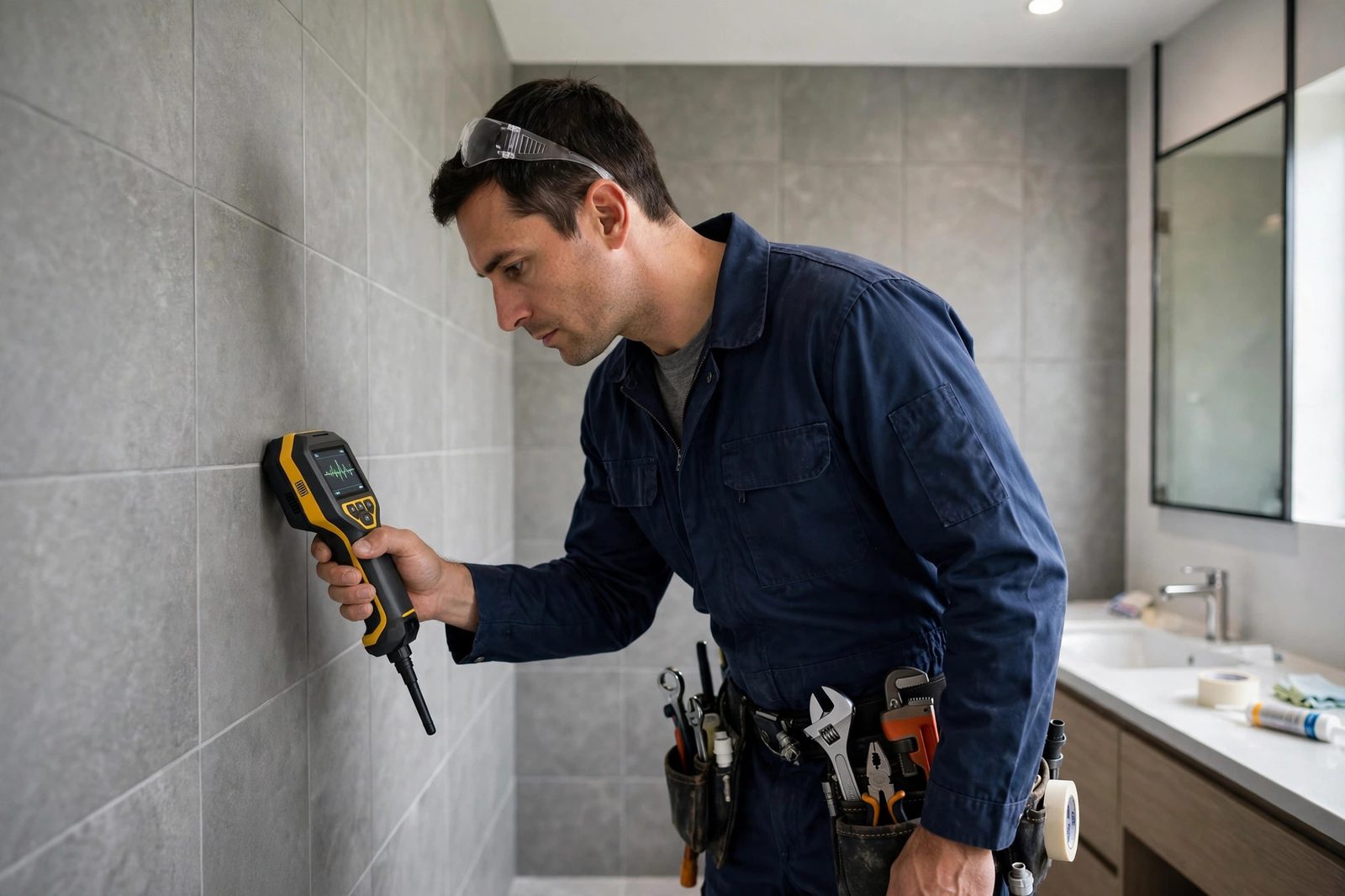
Stopping the water is step one. Step two is finding where it came from — a failed joint, a cracked pipe, a worn seal — and repairing it properly so it doesn't return. That's exactly what our leak detection visits do: trace, repair, test, and leave the area clean.